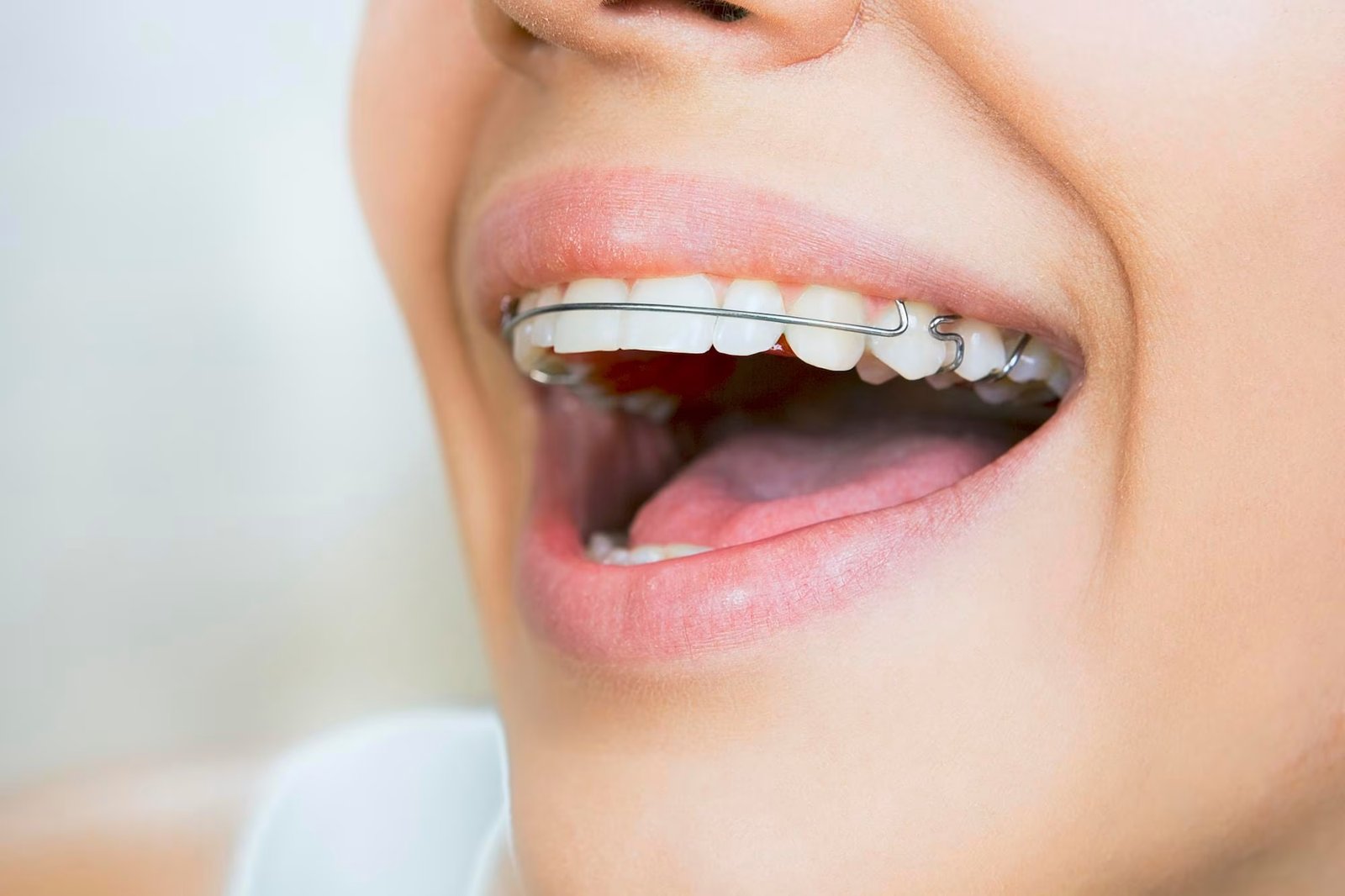
If you just finished orthodontic treatment, you have probably already heard the phrase every orthodontist says at the finish line: your teeth are only as straight as your retainer wear allows. So how long do you have to wear a retainer? For most patients, retainer wear starts at full-time, 20 to 22 hours a day, for the first three to six months after braces or Invisalign, then tapers down to nighttime wear only. For long-term stability, most orthodontists recommend wearing a retainer at night indefinitely, since teeth can shift at any age without consistent support.
This guide is written for anyone who has just finished braces or clear aligners and wants a clear answer on retainer wear, along with anyone whose retainer feels tight after a break and wants to know whether their teeth have already shifted. At Dante Gonzales Orthodontics, protecting your investment in a straighter smile doesn't end when your braces come off or your last aligner tray is finished — it continues with proper retainer wear and care.
Why You Need a Retainer After Orthodontic Treatment
Braces and clear aligners move teeth into new positions, but the bone and surrounding tissue that hold those teeth in place take much longer to adapt. Immediately after orthodontic treatment, teeth are still loosely held in their new positions, and the ligaments and bone around them need time to stabilize. Without a retainer, teeth naturally move back toward their original positions, a process called relapse. A retainer holds teeth in their new, ideal positions while the supporting bone catches up, providing constant support during this critical window.
How Long Do You Have to Wear a Retainer?
Retainer wearing guidelines vary based on individual cases, but most orthodontic treatment plans follow a similar pattern.
Full-Time Wear: The First 3 to 6 Months
In the early days after braces or Invisalign, most orthodontists recommend wearing your retainer full time, for 20 to 22 hours daily, removing it only to eat and brush your teeth. This initial phase typically lasts at least three to six months and is the most important period for preventing teeth from shifting back to their original positions.
Transitioning to Nighttime Wear
Once your teeth are stable, usually after the first six months, most patients transition to night-time wear only. At this stage, wearing your retainer every night becomes part of a long-term routine rather than an all-day commitment. Many patients find that nighttime-only wear becomes second nature within a few weeks.
Long-Term and Lifelong Retention
Because teeth naturally shift throughout adulthood, regardless of whether you ever had braces, most orthodontists recommend long-term or even lifelong nighttime retainer wear to maintain your results. This doesn't mean you need to wear a retainer forever the way you wore braces, but consistent nighttime wear provides lifelong protection for your smile.
Why Teeth Shift Without a Retainer
Teeth are not fixed in place like posts in concrete. They are held in the jaw by a ligament that allows for a small amount of natural movement, which is exactly what allows orthodontic treatment to work in the first place. That same flexibility means teeth can shift back once the force from braces or aligners is removed. The surrounding bone and tissue also continue remodeling for months after treatment ends, so skipping retainer wear during this window is one of the most common reasons patients need costly retreatment.
How Fast Can Teeth Shift Without a Retainer?
One of the most common questions patients ask is how fast teeth move without a retainer. The honest answer is faster than most people expect.
| Time Without a Retainer | What Typically Happens |
|---|---|
| 2 days | Minor tightness may be noticeable when the retainer is reinserted, though visible shifting is unlikely |
| 4 days | Teeth can begin very slightly shifting, especially soon after treatment; a retainer may feel tighter |
| 2 weeks | Noticeable shifting is more likely, particularly for front teeth and lower front teeth, which tend to move first |
| Several months | Teeth can shift enough to require professional evaluation and possibly retreatment |
Front teeth and lower front teeth tend to shift the fastest since they experience the least bone support and the most daily pressure from biting and chewing. This is also why many patients notice their retainer feels tight after even a short break from wear.
Types of Retainers
Removable Retainers
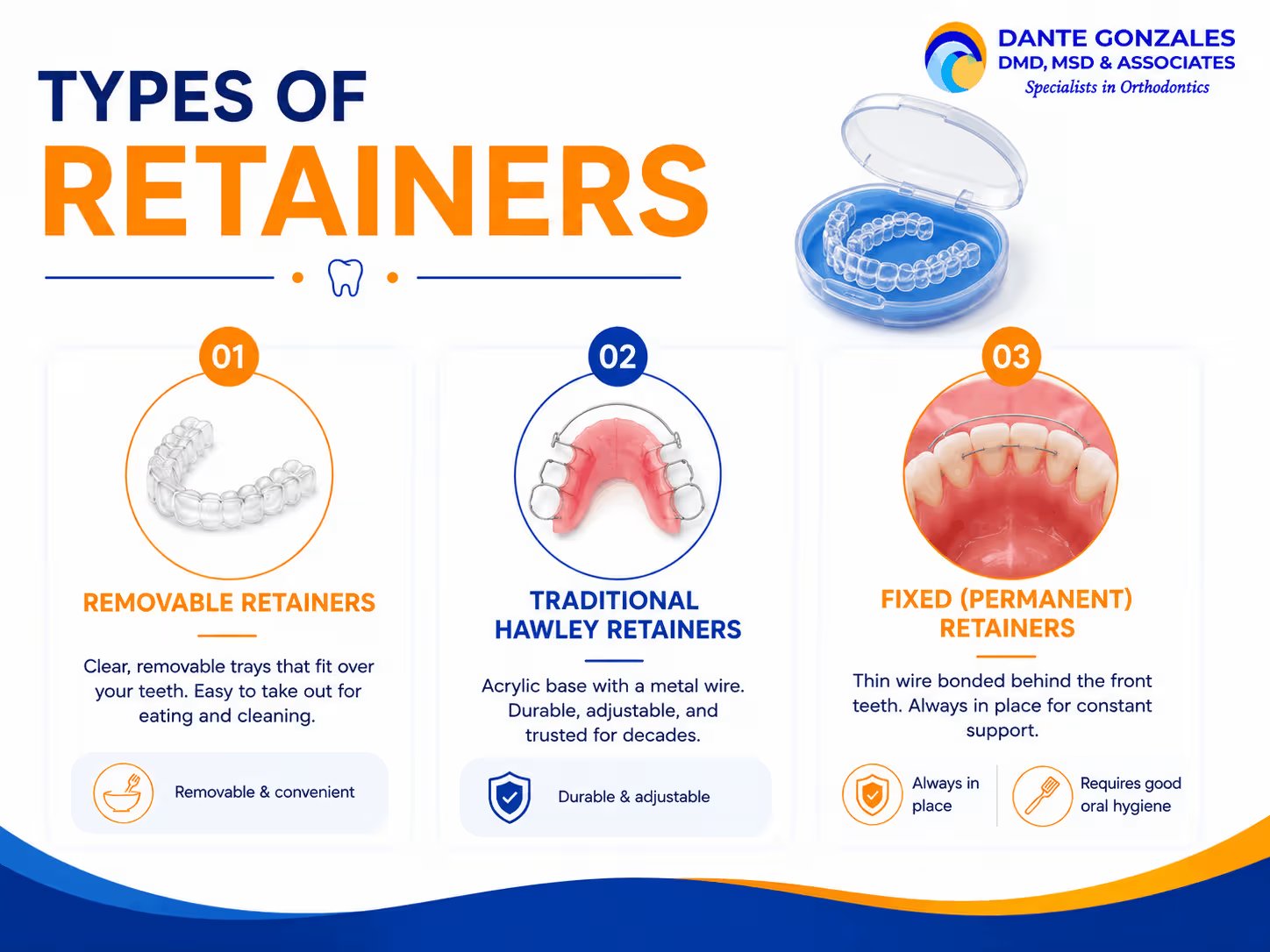
Removable retainers are the most common option recommended after braces or Invisalign. Clear plastic retainers, sometimes called Essix retainers, are custom made to fit snugly over all teeth and are virtually invisible. They can be removed for eating and cleaning, which many patients prefer for convenience.
Traditional Hawley Retainers
Traditional Hawley retainers use a metal wire across the front teeth combined with an acrylic base that sits against the roof of the mouth or behind the lower teeth. Hawley retainers are durable, adjustable, and have been a standard retainer option for decades.
Fixed (Permanent) Retainers
Fixed retainers, sometimes called permanent retainers, are a thin wire bonded directly to the back of the front teeth. Because they are always in place, fixed retainers provide constant support without relying on patient compliance, though they require careful cleaning with a soft toothbrush and floss threaders to prevent plaque buildup around the wire. Many patients use both a fixed retainer on the lower front teeth and a removable retainer for additional nighttime support.
Retainer Wear After Braces vs. After Invisalign
| Factor | After Braces | After Invisalign |
|---|---|---|
| Initial full-time wear | 3 to 6 months typical | 3 to 6 months typical |
| Long-term wear | Nightly, often indefinitely | Nightly, often indefinitely |
| Retainer delivery | Usually fitted the same day braces come off | Often the last aligner tray transitions directly into a retainer |
| Retainer type most used | Hawley or clear removable retainers | Clear plastic retainers, since patients are already used to wearing aligner-style trays |
What Happens If You Stop Wearing Your Retainer
Stopping After a Few Weeks
If you stop wearing your retainer within the first few weeks after treatment, teeth can shift relatively quickly, since the bone and tissue supporting them haven't fully stabilized yet. Even a two-week gap during this early period can allow noticeable movement, particularly in the front teeth.
Stopping After 2 Years
Even patients who have worn a retainer consistently for two years or longer can experience some shifting if they stop altogether, since teeth continue to move naturally throughout adulthood. Two years of consistent wear is a great foundation for long-term retention, but it is not usually considered a finish line where a retainer can be permanently retired. Most orthodontists recommend continuing nighttime wear indefinitely, even after years of stability, for lifelong protection of your results.
Retainer Care Tips
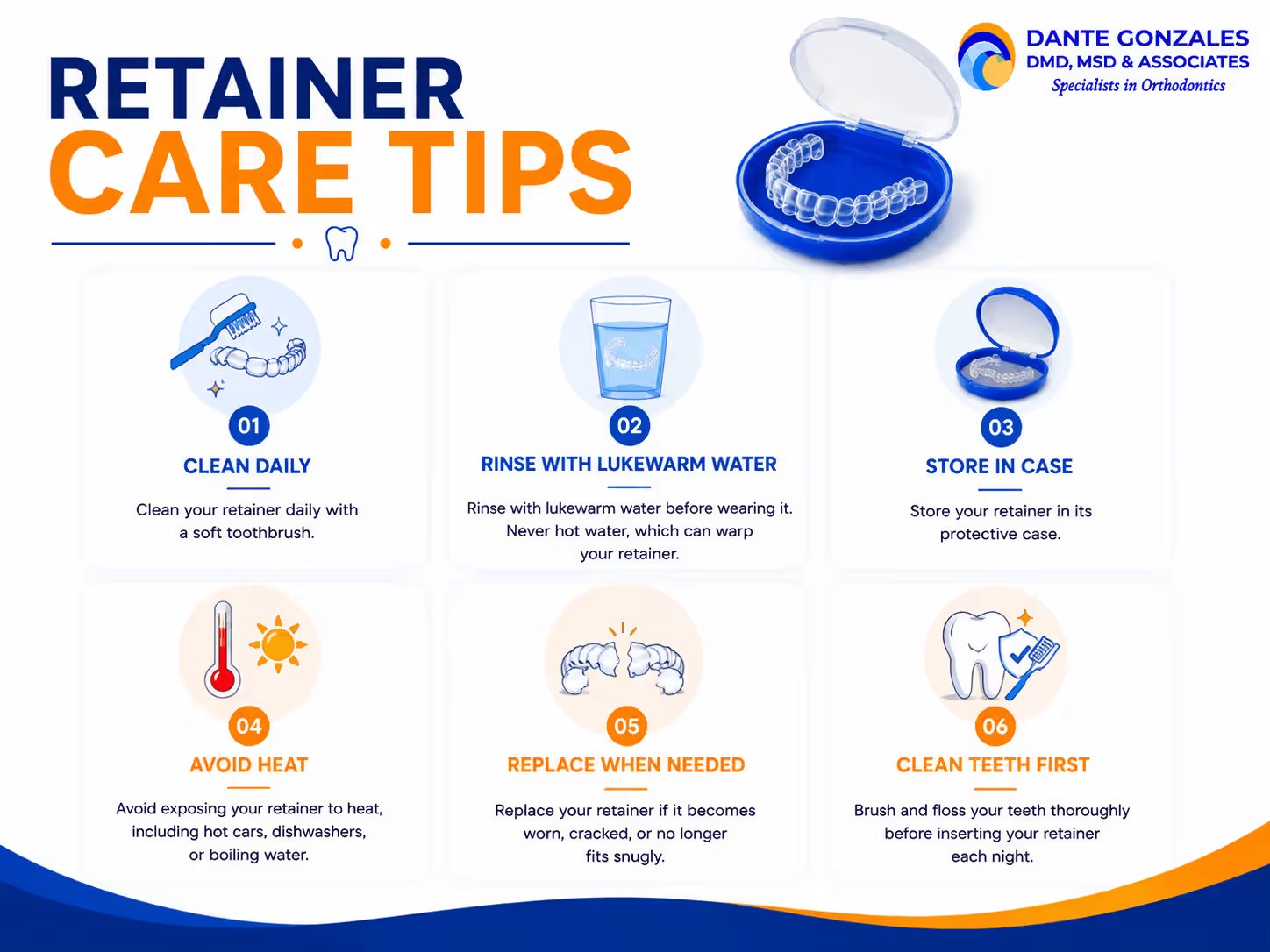
Proper care extends the life of your retainer and keeps your teeth and gums healthy:
- Clean your retainer daily with a soft toothbrush to remove plaque and bacteria
- Rinse your retainer with lukewarm water before wearing it — never hot water, which can warp clear plastic retainers and Hawley retainers alike
- Store your retainer in its protective case whenever it's not in your mouth
- Avoid exposing your retainer to heat, including hot cars, dishwashers, or boiling water
- Replace your retainer if it becomes worn, cracked, or no longer fits snugly
- Brush and floss your teeth thoroughly before inserting your retainer each night
Signs Your Retainer No Longer Fits
If your retainer feels tight, difficult to seat fully, or causes noticeable pressure that wasn't there before, this can be an early sign that your teeth have already started to shift. Contact your orthodontist promptly rather than waiting, since catching minor shifting early is far easier to correct than addressing significant movement later.
Do You Have to Wear a Retainer Forever?
In a practical sense, yes — most orthodontists agree that some form of retainer wear, even just a few nights a week for long-term maintenance, is part of protecting your orthodontic results for life. Teeth naturally shift with age regardless of past orthodontic treatment, so consistent retainer wear is less about an arbitrary insurance policy and more about maintaining the ideal positions your teeth worked hard to reach.
Get Long-Term Retention Support at Dante Gonzales Orthodontics
Every patient's orthodontic journey is different, and your retainer wear schedule should be tailored to your individual case, treatment history, and how your teeth respond after braces or Invisalign. At Dante Gonzales Orthodontics in Dublin and Tracy, CA, we provide clear retainer options, fitting guidance, and ongoing check-ins to make sure your new smile stays exactly where it should. If your retainer feels tight, is damaged, or you're unsure how long you should be wearing yours, schedule a visit and let us help you protect your results for the long term.
This content is provided for general educational purposes and is not a substitute for professional medical advice from your treating orthodontist.