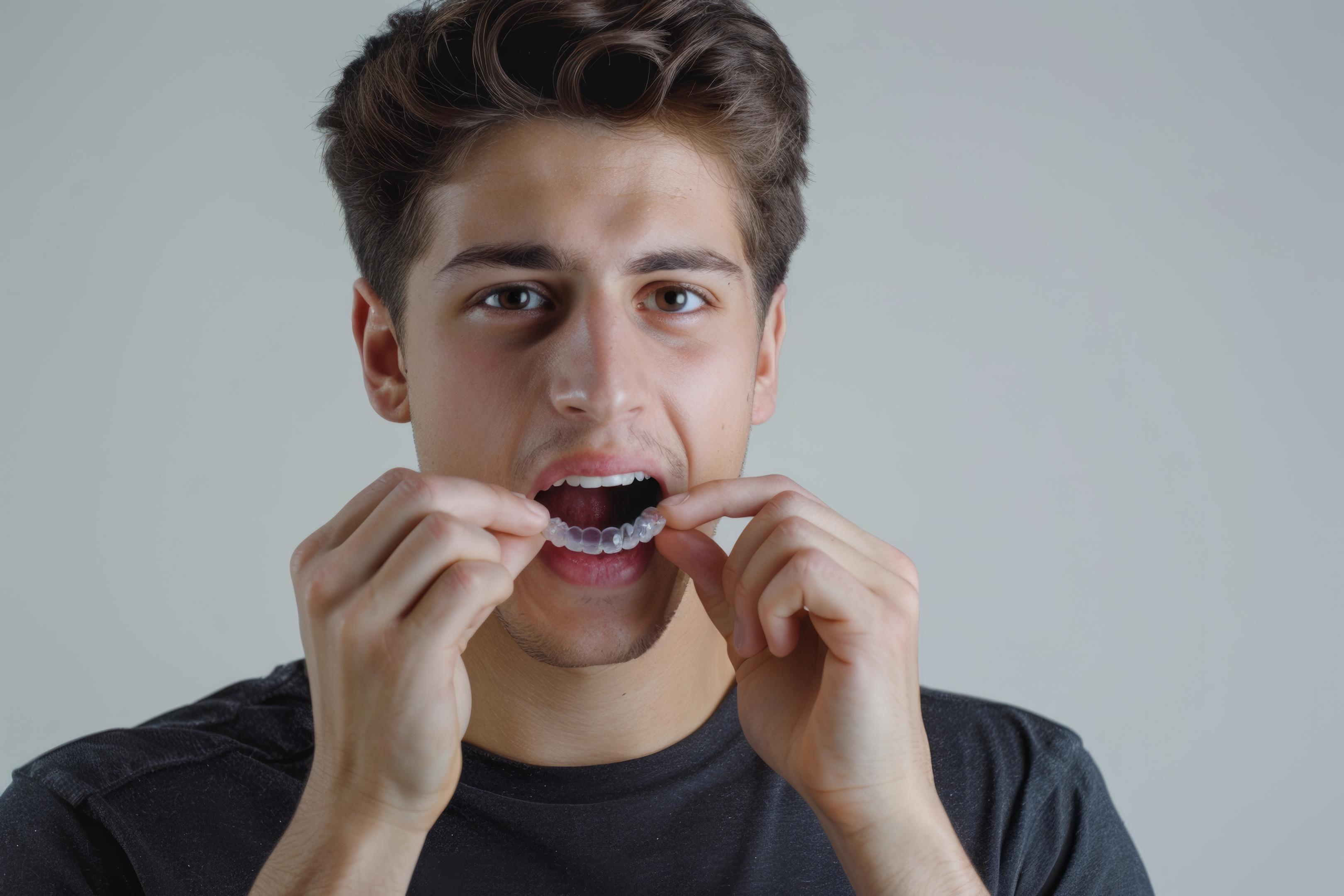
If your top teeth sit too far over your bottom teeth, you have an overbite. An overbite occurs when there is excessive upper front teeth overlap over the lower front teeth, resulting in abnormal overlap that can affect both dental function and facial aesthetics. It’s one of the most common dental issues and the good news is, you don’t always need metal braces to fix it. Untreated overbite can lead to complications such as uneven enamel wear and jaw problems, so addressing it early is important.
For many people, Invisalign works just as well, with far less hassle. In this blog you will learn what an overbite is and how Invisalign can fix overbite.
What Is an Overbite?
Natural and healthy upper teeth overlap over the lower teeth is completely normal. The problem starts when the upper front teeth overlap the lower front teeth excessively, causing your upper teeth to cover too much of your lower teeth.
This is called an overbite, or a “deep bite,” and it can be caused by:
- Genetics: Jaw structure and tooth size are often inherited
- Childhood habits: Thumb sucking, pacifier use, or tongue thrusting
- Poor oral habits: Such as nail biting or prolonged bottle feeding
- Teeth grinding: Puts pressure on the jaw over time
- Missing teeth: Causes surrounding teeth to shift
If left untreated, an overbite can lead to jaw pain, difficulty chewing, speech problems, premature tooth wear, excessive wear, gum recession, and even tooth decay. It’s not just a cosmetic issue, it affects your long-term oral health.
Can Invisalign Fix an Overbite?
Yes, in most cases. Invisalign is a popular orthodontic treatment and an effective alternative to traditional braces for overbite correction, especially for mild to moderate cases. It works by using a series of custom clear aligners that gradually shift your teeth into the right position, improving your bite alignment over time.
But the success of overbite correction Invisalign depends on the severity of the overbite. Overbites ranging from mild to moderate overbites are more likely to be corrected, while severe skeletal overbites, where the jaw bones themselves are misaligned, may require traditional braces or corrective jaw surgery. However, many patients have achieved successful overbite correction with Invisalign, making it a trusted choice for those seeking an alternative to traditional braces.
Treatment success rate depends on:
- How severe your overbite is (overbite depends on the specific case and severity)
- Wearing your aligners 20 to 22 hours every day
- Your orthodontist’s experience and treatment planning
- Your overall oral health going in
How Invisalign Corrects an Overbite
The treatment begins with an orthodontic evaluation, where your orthodontist assesses your bite and alignment using advanced tools. The Invisalign treatment process involves digital planning with 3D imaging technology to create a customized treatment plan tailored to your needs. Your orthodontist starts with a 3D digital scan of your teeth, and from there, a step-by-step treatment process is mapped out showing exactly how your teeth will move, tray by tray.
You wear each set of Invisalign aligners, which are removable and invisible aligners, for 1 to 2 weeks, then move to the next. These aligners are discreet, comfortable, and can be removed for eating, brushing, and flossing. Gradually, tooth movement occurs, shifting your teeth into their proper positions. To fix an overbite specifically, your orthodontist may use:
- Attachments: Small tooth-colored dots that help the aligners grip and move teeth more precisely
- Elastics: Rubber bands that apply gentle pressure to correct the relationship between your upper and lower jaw and assist with jaw alignment
- Mandibular advancement features: Available in Invisalign Teen to guide the lower jaw forward naturally
It’s a gradual treatment process, but a predictable one.
Invisalign vs Traditional Metal Braces for Overbite
| Factor | Invisalign | Traditional Braces |
|---|---|---|
| Appearance | Nearly invisible | Visible brackets and wires |
| Comfort | Smooth, no sharp edges | Can irritate cheeks and gums |
| Removability | Remove for eating and brushing | Fixed. Cannot be removed |
| Effectiveness | Best for mild to moderate overbites; both Invisalign and braces aim to improve tooth alignment and proper alignment | Works for severe cases too; both Invisalign and braces aim to improve tooth alignment and proper alignment |
| Treatment time | 10 to 24 months | 18 to 28 months |
| Food restrictions | None | Avoid hard and sticky foods |
| Oral hygiene | Easy. Brush and floss normally. Removable aligners contribute to better oral hygiene | Harder to clean around brackets |
| Dental visits | Every 10-12 weeks | Every 6-8 weeks |
For most adults and teens with a moderate overbite, Invisalign is the more comfortable, convenient, and discreet choice. Improved tooth alignment and better oral hygiene with Invisalign also contribute to overall dental health.
How Long Does It Take?
- Mild overbite: around 10-14 months
- Moderate overbite: around 16–24 months
The biggest factor? Compliance. Wear your aligners and elastics consistently and you'll stay on track. Skip hours regularly and your results and timeline will suffer.
Who Is a Proper Candidate for Invisalign?
Invisalign overbite treatment has led to successful overbite correction for many patients, offering both functional improvements and cosmetic results.
Invisalign works best for people who:
- Have a mild to moderate dental overbite
- Are in good oral health (no untreated decay or gum disease)
- Will commit to wearing aligners and elastics 20 to 22 hours daily
- Are adults or teens looking for a discreet treatment option
- Want to achieve a straighter, healthier smile
When Invisalign May Not Be Enough?
Invisalign has its limits. It may not be the right fit if you have:
- A severe skeletal overbite caused by a large jaw discrepancy between the upper and lower jaws
- Significant jaw position misalignment that needs surgical correction
- Complex bite issues requiring major tooth extraction or repositioning
- A history of poor compliance with removable dental appliances, as improper use of aligners or lack of professional supervision can lead to issues such as jaw strain
In these cases, traditional braces or corrective jaw surgery may be recommended, instead of or alongside Invisalign.
Benefits of Choosing Invisalign
- Virtually invisible: Most people won't notice you're in treatment
- Comfortable: No wires, no brackets, no irritation
- Removable: Continue your regular diet
- Easier oral hygiene: Lower risk of cavities and gum issues during treatment
- Fewer appointments: Fits easily into a busy schedule
The Bottom Line
Invisalign is a proven, effective option for treating overbites. It's discreet, comfortable, and fits into real life far better than traditional braces.
If you've been putting off overbite treatment because you don't want metal in your mouth, this might be exactly what you need.
The next step is simple: book a consultation with an Invisalign-certified orthodontist. One appointment is all it takes to find out if Invisalign is right for your condition. Your healthier, more confident smile is closer than you think.