TMJ pain affects millions of people who deal with chronic jaw pain, persistent jaw tension, and the relentless discomfort of teeth grinding every single day. For many patients, traditional tmj treatment options like mouthguards and physical therapy provide only partial relief leaving them searching for something more effective. Botox for TMJ has emerged as a clinically proven, minimally invasive treatment that delivers significant relief from tmj symptoms by targeting the root causes of muscle-driven jaw pain directly. At Dante Gonzales Orthodontics, we help patients understand how botox works for tmj disorders and whether it is the right treatment option for their specific symptoms.
What Is Botox for TMJ and How Does It Work?
Botox for tmj is a therapeutic application of botulinum toxin a purified protein that temporarily blocks nerve signals to specific muscles. When botox injections are administered into the overactive jaw muscles that drive tmj pain, the treatment reduces muscle tension, prevents excessive jaw clenching, and gives the temporomandibular joint the relief it needs to recover from chronic strain. Botox works by temporarily blocking nerve signals to the jaw muscles, which helps to reduce muscle tension, pain, and the frequency of clenching associated with tmj disorders.
Unlike invasive treatments that alter the joint structure, botox for tmj pain is a non-surgical, in-office procedure that takes less than 30 minutes to complete. Most patients find relief from their tmj symptoms within three to five days after treatment, with optimal results fully noticeable within two weeks of the botox injections.
Which Muscles Are Injected?
Botox is injected into key jaw muscles specifically the masseter and temporalis muscles to help relieve tmj symptoms by reducing muscle tension and preventing excessive clenching. The masseter is the large chewing muscle on each side of the jaw, and the temporalis muscle runs along the temple and plays a central role in jaw movement. In patients with tmj disorders driven by chronic jaw clenching and teeth grinding, these muscles become chronically overworked, producing the jaw pain, facial tension, headaches, and discomfort that define severe tmj-related pain. Botox reduces the intensity of contractions in these muscles without eliminating jaw function or affecting everyday activities like chewing and speaking.
The Mechanism: Blocking Nerve Signals
Botox treats tmj disorders by blocking the release of acetylcholine the neurotransmitter responsible for triggering muscle contractions. When injected into the facial muscles driving the tmj disorder, botulinum toxin prevents the nerve signals that cause involuntary jaw clenching and muscle spasms from reaching the muscle fibers. The result is a gradual reduction in muscle stiffness, jaw tension, and the tightness that radiates through the jaw, neck, and temples. This targeted approach to pain relief addresses the muscle-level root causes of tmj pain without affecting the surrounding tissues or altering jaw anatomy.
What Does Botox for TMJ Actually Treat?
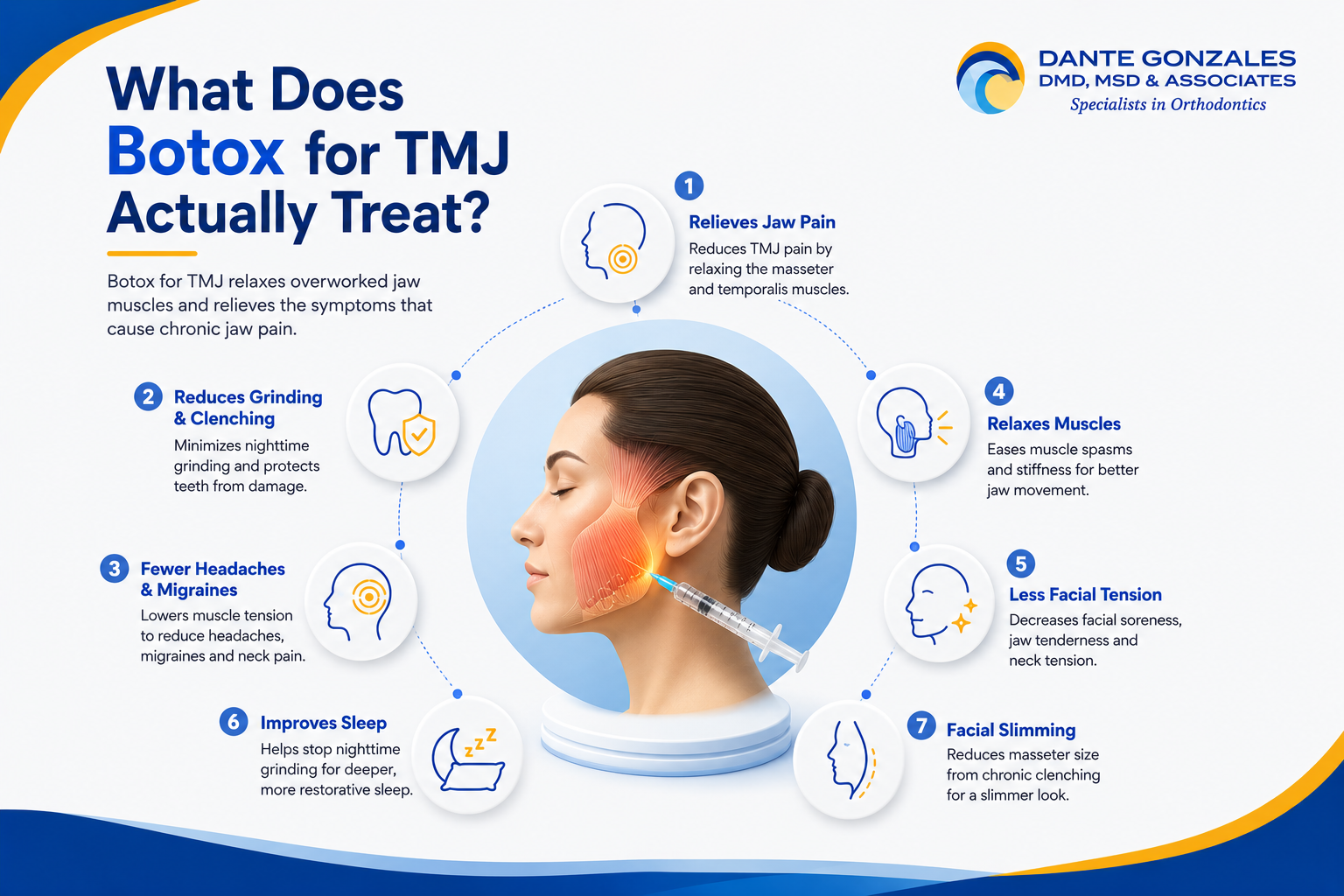
Botox for tmj provides fast, non-surgical relief for tmj disorders by relaxing overworked jaw muscles and reducing the secondary symptoms that make chronic jaw pain so disruptive. For tmj patients, the benefits of botox treatment extend well beyond simple jaw discomfort:
- Jaw pain and chronic jaw pain — direct reduction in tmj pain through relaxation of the masseter and temporalis muscles
- Teeth grinding and jaw clenching — botox minimizes heavy nocturnal grinding, preventing long-term dental complications such as enamel erosion and fractured teeth
- Headaches and migraines — botox treatment can reduce secondary symptoms like tension headaches, migraines, and neck pain by decreasing muscle tension across the jaw and temple
- Muscle spasms and muscle stiffness — relieving muscle spasms with botox helps patients regain a normal range of jaw motion, improving comfort while chewing and speaking
- Facial soreness and jaw tension — botox can decrease widespread facial soreness, jaw tenderness, and persistent neck tension associated with tmj disorders
- Sleep disruption — botox helps improve sleep by preventing subconscious nighttime teeth grinding, leading to deeper, more restorative rest
- Facial slimming — botox can lead to a reduction in masseter muscle size from chronic clenching, which may produce a natural facial slimming effect over time
What to Expect During and After Botox for TMJ Treatment
During the Procedure
Botox for tmj is a minimally invasive procedure that typically takes less than 30 minutes from start to finish. Your dentist or tmj specialist will identify the specific jaw muscles driving your tmj pain through physical assessment, then administer a series of precisely placed botox injections into the masseter and temporalis muscles. Most patients describe the injections as a mild pinching sensation the procedure requires no anesthesia and no recovery time. You can return to your normal daily habits immediately after the treatment.
After the Injections: Timeline of Relief
Botox for tmj typically provides relief from symptoms within three to five days after treatment, with the full therapeutic benefit becoming noticeable within two weeks as the muscles gradually relax. Most patients experience significant relief from their tmj-related pain including jaw pain, headaches, and jaw tension well within the first week following their botox treatment. The following symptoms associated with tmj disorders typically improve progressively as the botox reduces muscle activity: jaw discomfort, teeth grinding, morning soreness, and the tightness that makes chewing uncomfortable.
How Long Does Botox Last for TMJ?
The effects of botox for tmj pain relief generally last between three to six months, after which symptoms return and additional treatments may be necessary to maintain relief. The therapeutic relief from botox injections is often recommended alongside traditional treatments like night guards or splints for optimal results and longer-lasting jaw pain management. When botox is combined with physical therapy, stress management techniques, and mouthguards, many patients find that the duration between required treatments extends as the underlying muscle tension patterns improve over time.
Side Effects and Safety
Botox is FDA-approved for various medical and cosmetic uses, including the treatment of tmj disorders, and is generally considered safe when administered by a trained healthcare professional. Common side effects of botox injections for tmj treatment include mild swelling, redness, and bruising at the injection sites most of which resolve within a day. Some patients experience temporary soreness at the injection site or a mild headache in the first 24 hours. Serious adverse effects are rare when botox treatment is performed by an experienced dentist or tmj specialist using appropriate dosing protocols.
The 4-Hour Rule After Botox
After receiving botox injections for tmj, patients are typically advised to remain upright for at least four hours and to avoid rubbing or massaging the injection sites during this period. This 4-hour rule prevents the botox from migrating to unintended muscles before it has fully settled at the injection site. Patients should also avoid strenuous physical activity for the remainder of the day following their botox treatment.
Botox for TMJ vs. Mouthguard: Which Is Right for You?
Both botox for tmj and mouthguards are widely dentist-recommended treatment options for tmj disorders. Understanding the difference helps patients and their dentist identify the most appropriate approach or combination of approaches for their specific tmj pain profile.
| Factor | Botox for TMJ | Mouthguard / Splint | Duration |
|---|---|---|---|
| How It Works | Blocks nerve signals to jaw muscles reduces muscle tension & clenching | Protects teeth when grinding during sleep cushions jaw joint | 3–6 months |
| Best For | Muscle-driven TMJ pain, jaw tension, headaches from clenching | Bite protection, mild to moderate jaw discomfort | Ongoing |
| Invasiveness | Minimally invasive injections only, no surgery | Non-invasive worn during sleep | — |
| Pain Relief Speed | Relief within 3–5 days, optimal results within 2 weeks | Gradual reduction in symptoms over weeks of consistent use | — |
| Addresses Root Cause | Yes, treats muscles that are causing symptoms | No prevents damage, does not correct underlying disorder | — |
| Side Effects | Mild swelling, redness, bruising resolves within a day | Minimal possible initial discomfort adjusting to appliance | — |
| Dentist Recommended | Yes widely recommended by dentists and TMJ specialists | Yes first-line conservative treatment for TMJ disorders | — |
For many tmj patients, the most effective approach combines botox treatment with a custom mouthguard botox reduces the muscle tension and clenching that drive tmj pain, while the mouthguard protects the teeth and jaw joint from the residual grinding that persists during the early weeks of botox treatment. Physical therapy and relaxation techniques further address the root causes of muscle tension, supporting long-term relief beyond what any single treatment option can deliver alone.
Is Botox for TMJ Right for You?
Botox for tmj is most effective for patients whose tmj disorders are primarily driven by muscle-related factors chronic jaw clenching, teeth grinding, and overactive masseter or temporalis muscles. Many patients who have tried other treatments without finding lasting relief discover that tmj botox delivers the significant relief that conservative options alone could not provide. Good candidates for botox treatment include:
- Patients with persistent jaw pain and chronic jaw pain that has not fully responded to mouthguards or physical therapy
- Patients with severe teeth grinding causing enamel erosion, fractured teeth, or morning jaw soreness
- Patients experiencing regular headaches, migraines, or neck tension linked to jaw muscle overactivity
- Patients seeking a minimally invasive treatment that does not require surgery or permanent alteration of the jaw
When Botox for TMJ May Not Be Sufficient
It is important to understand that using botox as a treatment is considered complementary and does not address the structural root cause of tmj disorders. For patients whose tmj pain is primarily driven by disc displacement, degenerative joint disease, or bite misalignment, botox treatment addresses the symptoms muscle tension and jaw discomfort without correcting the underlying structural disorder. In these cases, botox is most valuable as part of a broader treatment plan that includes orthodontic assessment, physical therapy, and in some cases consultation with an oral surgeon. Your dentist or tmj specialist will evaluate whether botox for tmj pain is appropriate for your specific case during the initial consultation.
Find Relief from TMJ Pain at Dante Gonzales Orthodontics
If chronic tmj pain, persistent jaw tension, teeth grinding, or tmj-related headaches are affecting your daily life and other treatments have not delivered lasting relief, botox for tmj may be the solution you have been looking for. At Dante Gonzales Orthodontics, we assess the full picture of your tmj disorder the jaw muscles involved, the severity of your symptoms, and any contributing bite alignment issues before recommending a treatment plan designed around your specific needs.
Comprehensive TMJ Assessment: We evaluate your jaw muscles, jaw joint, and bite alignment to identify the specific root causes driving your tmj pain and determine whether botox injections, orthodontic treatment, or a combination approach will deliver the most effective and lasting relief.
Expert Botox Treatment for TMJ: Our botox for tmj treatment is administered with precision targeting the masseter and temporalis muscles responsible for your jaw tension and chronic clenching so you find relief quickly, safely, and with minimal discomfort.
Integrated Long-Term Care: We combine botox treatment with complementary approaches including custom mouthguards and orthodontic bite correction where clinically appropriate, giving your tmj disorder the comprehensive, multi-layered treatment it requires for optimal results and long term relief.
If jaw pain, teeth grinding, or chronic tmj discomfort has been holding you back, Dante Gonzales Orthodontics in Dublin and Tracy, CA is ready to help you find relief with a personalized, expert-guided treatment plan.